

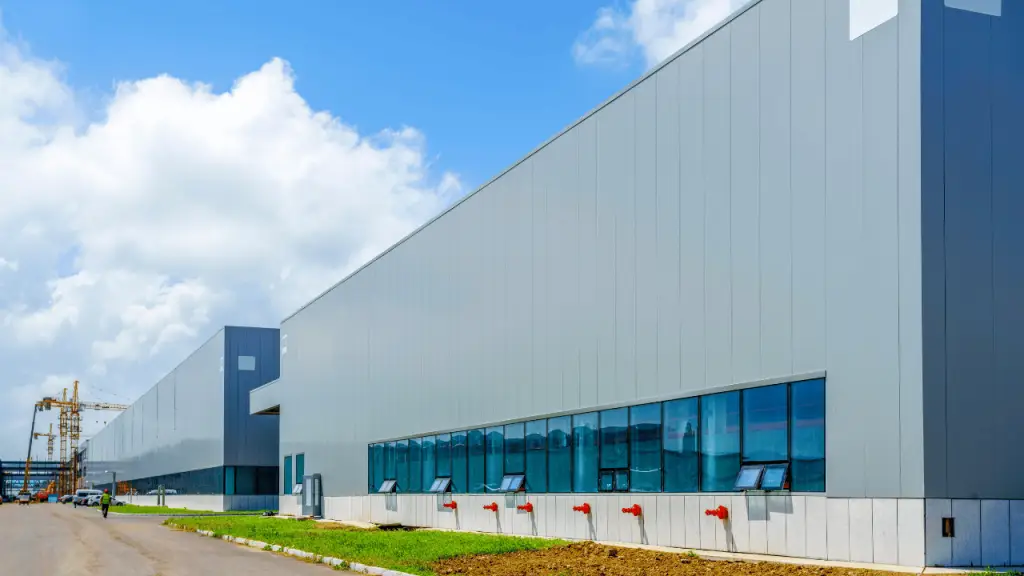
Warehouse vacancy just hit a 14-year high. So why is the right unit harder to find than ever?
The easy read on the warehouse market right now is that the squeeze is over.
UK logistics vacancy reached 7.1% in the final quarter of 2025, the highest level since 2011 (CBRE).
Across Europe the picture rhymes, with the weighted average vacancy rate sitting at around 6.8% by the third quarter of 2025, roughly double the record lows of under 3% we saw in 2021 and 2022 (Savills). Rent growth has slowed to a near standstill. The trade press has duly declared an occupier’s market, and plenty of supply chain leaders have quietly taken that as permission to relax their network planning.
I would be careful. The number that matters is not how much space has come back, but what kind. The rise in vacancy has been driven predominantly by second-hand stock returning to the market (CBRE), the older and second-best units that occupiers were already trying to leave. The modern building, in the right size, in the right place, with enough power to run it, is scarcer than it has been in years. The squeeze has not gone away. It has changed shape, and the new shape is harder to plan around than the old one.
The space coming back is not the space you want
Start with size. There is now a structural mismatch between what developers built and what occupiers want. In the most recent European logistics census,
65% of occupiers said they were considering a mid-box unit of 5,000 to 9,999 square metres, but only 25% of developers planned to build speculatively in that band
(Savills, Brookfield and Analytiqa).
Demand has moved the other way at the top end too. The share of occupiers chasing big box space above 10,000 square metres fell from 54% in 2024 to 13% in 2025 (Savills, Brookfield and Analytiqa). The industry spent the Amazon era building mega sheds, and demand has since walked off in the opposite direction.
The UK feels this acutely. Analysis for Potter Space found a shortfall of around 6.2 million square feet a year in units below 100,000 square feet, a 38% gap between supply and demand in the small to mid-box range (Savills). Scarcity has done what scarcity does to price. Rents for sub 100,000 square foot industrial units have risen 79% on average since 2014 (Savills). Building your own way out is getting harder rather than easier. UK build to suit take up in the first half of 2025 was just 2.77 million square feet, the lowest since 2013 (Savills), with lead times of around 18 months once planning is included (Savills). The occupier who needs a specific unit in a specific region is left with three poor options: take something bigger than needed, retrofit something older than ideal, or wait.
Power has quietly become a site selection criterion
The second constraint barely featured in site selection a decade ago. Power. Two trends have collided. Electric fleets need somewhere to charge, and modern automation and dense storage draw far more electricity than a conventional shed. A site that looks perfect on cost and location can fail on a single question: can the grid actually feed it, and when?
In parts of West London, developers seeking new connections above 1 MVA have been told they may wait until 2035, with some projects quoted dates as late as 2037 (Greater London Authority). The Netherlands, one of Europe’s core logistics markets, is further down the same road. Grid congestion there means waits of up to a decade for new or upgraded connections in some regions (TenneT), and the effect on property is already measurable.
Logistics vacancy sits at 3.7% in areas with available electricity against 6.9% in areas with consumption congestion
The same analysis notes that an average logistics building now uses 192.7 kWh per square metre a year, more than double the figure for an office (Savills). Power is no longer a utility you arrange after signing. It is a primary criterion, and on some sites it is the binding one.
The 2030 problem sitting in your existing estate
The third constraint is the one most likely to be ignored, because it concerns buildings you already occupy. The UK government has proposed lifting the minimum energy efficiency standard for commercial property to EPC B by 2030, the point at which a building that falls short could become difficult to let. On current estimates, 73% of existing UK industrial and logistics floorspace sits below that threshold (British Property Federation and Savills). This matters because the stock is old. 82% of warehouses were built before 2000 and only around 6% have been upgraded in the past five years (Savills).
I want to be careful here, because the regulatory detail is genuinely unsettled. The government’s formal response to its consultation has still not been published, and several commentators expect the 2030 date to slip, possibly to somewhere between 2030 and 2035. Treat it as a direction of travel rather than a fixed deadline. The commercial signal is already showing up regardless. Rather than paying a premium for efficient buildings, more than a quarter of occupiers are now actively seeking a discount on non compliant ones (CBRE), and 40% believe a quarter to a half of their current portfolio will be obsolete by 2030 without real investment (CBRE). An older facility is quietly moving from an asset towards a liability, whether or not the date holds.
Key takeaways for supply chain leaders
- Make size, power and lettability primary filters in any site search, ahead of headline cost. The scarce asset now is the right modern unit, so the first question is whether a suitable building exists at all, not simply what it costs.
- Start build to suit projects and major moves 18 to 24 months out. With the development pipeline thin and lead times long, a late start almost guarantees a compromise.
- Treat power as a contractual matter. Ask landlords to evidence secured connection capacity in MVA, negotiate rights to additional capacity, and model on site solar and storage where the grid timeline is prohibitive. On a constrained grid, assume you will need generation on site unless the operator tells you otherwise.
- Audit your existing estate against the EPC trajectory now. Identify which sites face the 2030 cliff edge, obtain accurate post 2022 ratings and decide retrofit or exit on each, even though the exact date may move.
- Use the genuine leverage on terms while it lasts. The market has softened on rents, incentives and flexibility. Push hard on the commercial terms for the modern units you do secure, but do not mistake better terms for more choice.
Beyond The Hype – final thoughts
Every property cycle produces a headline that lets people stop worrying, and “vacancy is up, the squeeze is over” is this cycle’s version. It is true and misleading at the same time. The market has more space in it, and almost none of that space solves the problem a supply chain leader is trying to solve.
What strikes me is how completely the criteria have changed underneath us. For twenty years the warehouse conversation was about cost and location. The leaders who get the next decade right will be the ones planning around size, power and obsolescence instead, and starting those conversations far earlier than feels comfortable. The constraint has not eased. It has moved onto ground the old playbook does not cover.
How is the size, power and EPC picture playing out in your network planning right now? I would be interested to hear where it is biting hardest.